
A real portrait can make the thought of future love feel closer
A soulmate sketch is usually a portrait sent to you after you answer a few questions, sometimes with a written reading. The appeal is easy to understand... you get to open an image and imagine the person you might one day love. The format, delivery and accompanying words vary between services.
We haven't verified evidence that these drawings identify a future partner. You can still enjoy a sketch as romantic artwork or a spiritual reflection. It may give you a welcome moment to think about love without needing to settle who you will meet.
For this guide, we inspected public seller pages and our existing Dusk Mirror reviews. We did not buy or test a delivered product for this article. Some linked reviews contain affiliate links, and Dusk Mirror may earn a commission if you buy through them.
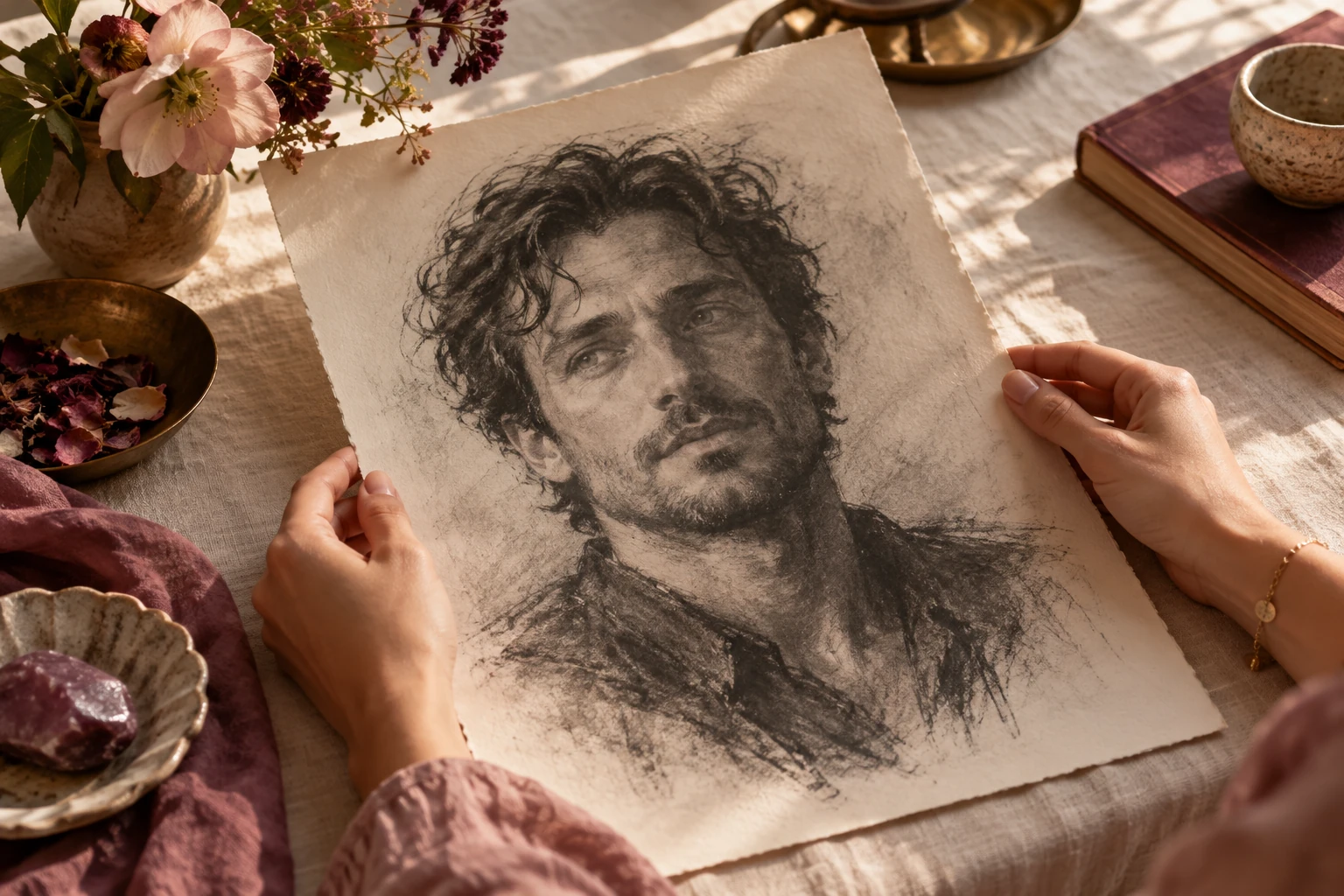
The picture and the reading offer different kinds of enjoyment
It helps to picture the offer in two halves. One half is what the seller says will turn up in your inbox. A face, perhaps some personality notes, maybe a compatibility guide. If it arrives, you can judge whether it's well drawn and whether you like it.
The reading adds a spiritual interpretation to the face. Perhaps it describes someone affectionate, adventurous or quietly dependable. You might enjoy noticing which qualities make you smile, and which matter more to you than the way the man in the drawing looks.
Think about what would make the experience lovely for you
Would you like a beautiful file to keep, a reading to return to or simply the anticipation of seeing the face? Knowing what you would enjoy makes the choice more personal. You can then compare the delivery format, included reading and price with the experience you have in mind.
There can be pleasure in the waiting, too. You might make a cup of tea before opening the email or share the moment with a friend who understands why you're curious. Give yourself room to enjoy it in your own way.
Here's what one public offer says you'll receive
To make this concrete, we looked at the public sales page for Tina Aldea, one of the better known names in this area. You can read Tina Aldea's public soulmate sketch offer page for yourself. It describes a psychic sketch, a detailed reading and a compatibility guide, with email delivery within 24 hours, an express option and a headline 30-day money-back guarantee. The seller's separate refund page words that guarantee much more narrowly, which we cover below.
These details come from the public offer. For the service's included reading, ordering information and terms, our Tina Aldea soulmate sketch review goes into that service in more detail.
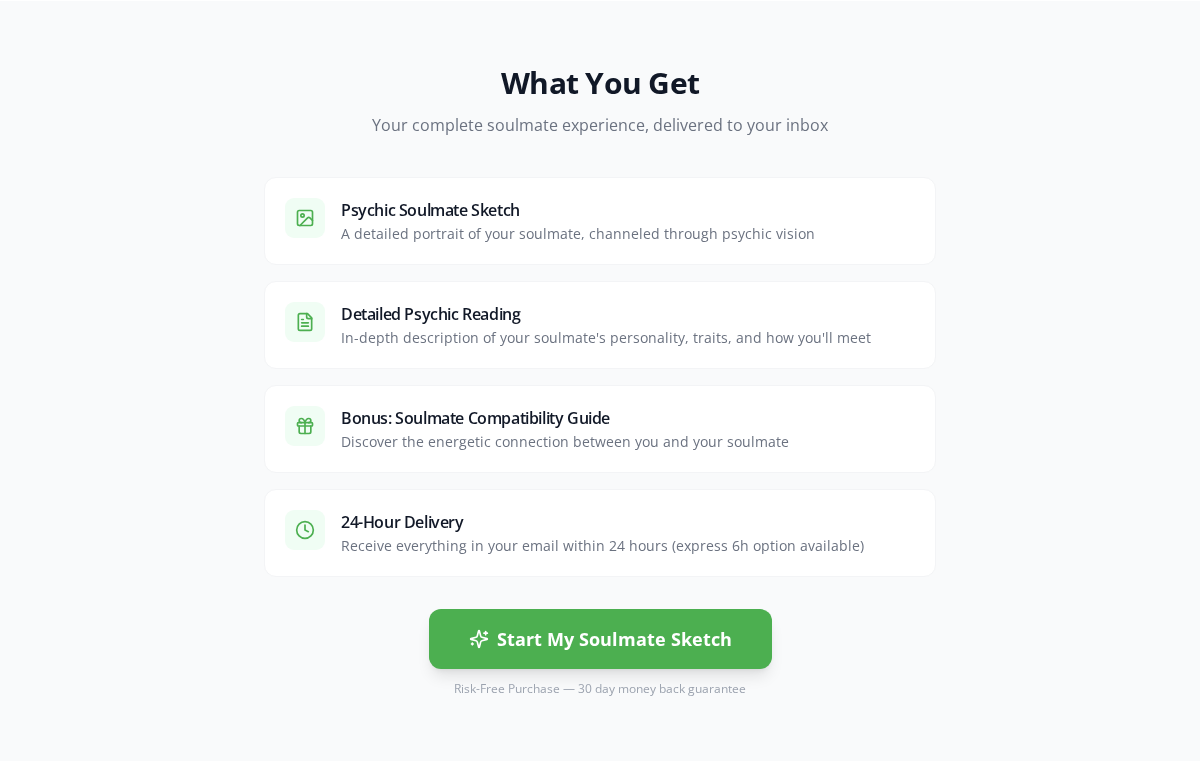
Not every seller includes the same pieces
One seller's bundle tells you little about another's. Some send only a drawing. Some add a written reading or a printed version, and some sell extras separately. Before comparing prices, list what each one says is included, in its own words, so you're comparing like with like.
The questions can help you think about the love you'd like
Many services begin with questions about your birth date, star sign, attraction or the relationship you hope for. Take your time with the answers if you enjoy that part. You may find yourself thinking about wishes you haven't put into words for a while.
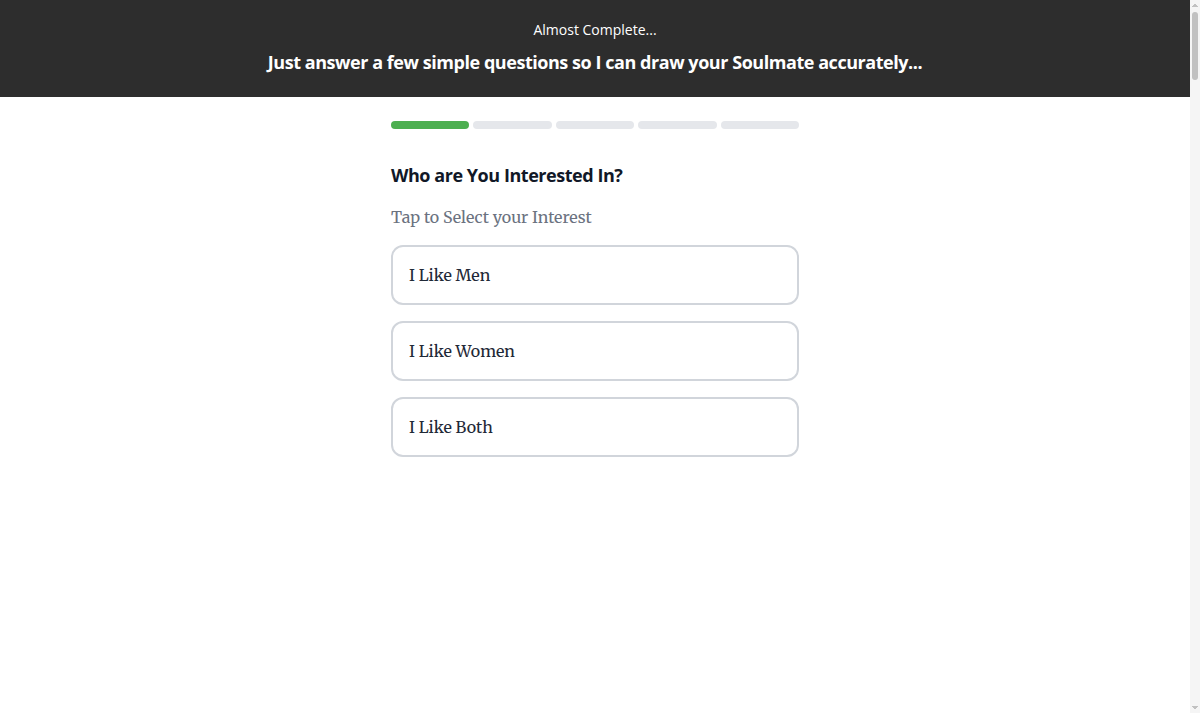
Perhaps you know what catches your eye but haven't considered what would make you feel cherished. Being asked about a future partner can be a chance to think about both.
If you want to know how the answers shape your order, look for the service's explanation or ask before paying. Some readers care most about the portrait, while others want a reading closely connected to the information they give. You can choose according to what interests you, without assuming all services work in the same way.
Can a sketch look like someone you know?
A portrait may remind you of someone. It might be the eyes, an expression or the shape of a smile that feels familiar. Whether you notice a resemblance will depend on the drawing and the faces you know.
You may think of a colleague, an old friend, a recent match or someone you noticed on the train. That can be fun, and it can also catch you off guard if the resemblance is to someone you already have feelings about.
A familiar smile can be interesting without deciding your next date
If a man you meet reminds you of the drawing, you can be curious about that resemblance and still get to know him in the usual way. Does he make you laugh? Is he available and interested? Do you enjoy the time you actually spend together? Those discoveries give a possible romance its own story.
Customer stories can be enjoyable to read, especially when someone describes a happy relationship. Read each as that person's account. The details about ordering, receiving and enjoying a sketch may help you picture the experience you would like for yourself.
If accuracy is your main question, decide what you mean by it
You might mean whether the portrait reflects your preferences, whether the reading feels personal or whether it depicts a man you later meet. Those are different hopes, so it helps to name yours.
A prediction study would need portraits recorded before people met their partners, a group that includes buyers with no match and independent comparisons against other faces. An individual resemblance or testimonial answers a much smaller question. That distinction is useful if prediction accuracy is what would determine whether you order.
For a purchase you would enjoy as art or reflection, you may care more about the style of the drawing and what the reading includes. Spend some time with those details. They are the parts of the offer you can compare before choosing.
You don't need everyone to want the same thing from a sketch. Be honest with yourself about what would make receiving it worthwhile for you.
You can't tell from a thumbnail whether it's handmade, digital or AI
Many sales pages show pencil-style portraits that look hand drawn. They may be. They may also be digital drawings, or AI images styled to look like graphite. From a small example, there's often no reliable way to know.
If the creative method matters to you, look for a statement such as hand drawn by the artist or created digitally. You can ask the seller if the description leaves you unsure, and keep the reply with your order information.
Small print matters here too. Tina Aldea's site footer, for example, says its sketches and readings are intended for entertainment purposes only and may not be unique. That's one seller's wording, but it's worth looking for a similar note on any page you're considering.
It's fine to be happy with any of the three methods. Just know what you're paying for rather than assuming craftsmanship because the preview looks like pencil on paper.
Use the examples to find a portrait style you enjoy
The examples on an offer page can help you decide whether its portrait style appeals to you. You may prefer a softly shaded face, a more detailed drawing or a particular kind of expression. These are display examples, so check how the service labels them and what it says you will receive.
- Look at several examples together. Do the faces vary, or look much alike?
- Check whether a sample is labelled as a delivered sketch or simply an illustration of the style.
- Notice whether testimonials describe the delivery and experience, or only meeting someone afterwards.
- Read clearly labelled customer accounts for details about ordering and receiving the work.
If you're choosing between services, begin with the format, included reading and portrait style. Our soulmate sketch reading reviews page compares the public offers side by side. Its ratings reflect our editorial view of those offers, so read the individual reviews for the details behind each choice.
Are free sketches real? Usually they're a different offer
Free soulmate sketches advertised on social media or in apps vary. Some are a free sample leading to a paid reading. Some are simple generated images in exchange for your email address. Some ask for a surprising amount of personal information.
A free sketch can be harmless fun. Just look at what you're giving in return. If it asks for card details, sets up a trial that later charges you, or wants your full name, birth date and location, it's a trade, and you're allowed to decide it isn't one you want.
The first price you see may not be the price at checkout
The headline price is a starting point. Before you finish paying, there may be offers for faster delivery, an extra reading, a printed copy or a bundle. Some are added with a single click, and some appear after you've already paid.
Before entering your card details, read every line of the order summary. Check the currency, because some sites charge in a different one and your bank may add a fee. And check whether anything is described as a subscription or membership rather than a one-off payment.
We're not quoting prices, because we didn't complete a checkout for this guide and prices can change. The figure that matters is the one on your own order summary.
Digital or physical changes what you're paying for
Many sketches are described as arriving as a digital file by email. That's quick, but image dimensions aren't always stated. A physical version, where offered, may involve postage costs, longer waits and a separate address form.
If you imagine framing it, ask about resolution or print quality before you order. If you only want to see it on your phone, the digital version is likely all you need.
Read the refund terms before you'd ever need them
A money-back promise on a sales page is reassuring, but the details sit in the full refund policy. It's far easier to read that now, calmly, than when you're disappointed.
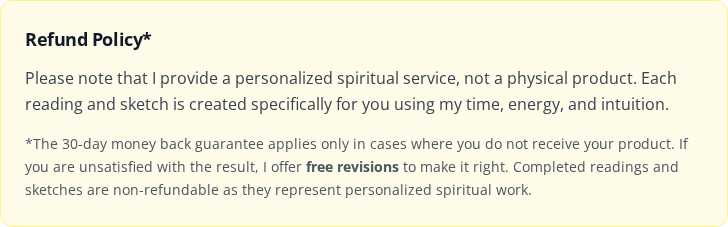
Tina Aldea's offer shows why. The sales page headlines a 30-day money-back guarantee. The seller's own Tina Aldea refund policy page says "The 30-day money back guarantee applies only in cases where you do not receive your product. If you are unsatisfied with the result, I offer free revisions to make it right. Completed readings and sketches are non-refundable as they represent personalized spiritual work." The same page points buyers to a ClickBank order lookup. In the seller's public wording, then, the guarantee covers non-delivery, and dissatisfaction is met with revisions rather than money back. We haven't tested how that works in practice.
On any seller's page, look for these things.
- What the guarantee covers, such as non-delivery only or dissatisfaction too.
- How long the refund window lasts, and whether it starts from purchase or delivery.
- Whether add-ons and express delivery are covered, or only the main sketch.
- Who handles the refund. Sometimes it's the seller, and sometimes a separate payment retailer with its own policy.
- How and where to ask. An email address, a form, or the retailer's support page.
A payment retailer may have its own terms, and consumer rights where you live may apply regardless of what a seller writes. We can't give legal advice or promise any refund will be granted. Save a copy of each policy as it reads on the day you buy.
Only share the personal details you're comfortable sharing
A sketch service may ask for your name, birth date, email address and answers about your relationships. Before you answer, ask what each detail is needed for, and if the page doesn't say, ask the seller. Don't assume any detail is required or enough, and don't submit made-up details, since that could cause problems with your order or support later. If a required field feels like too much, it's fine not to buy.
Read the privacy policy too. Look at what it actually says about sharing your answers with partners and how to ask for deletion, rather than assuming protections it doesn't state. A separate email address for purchases like this can keep follow-up marketing out of your main inbox.
Impersonators and lookalike pages are a more practical risk
Popular names attract copycats. You might see pages with a similar name, social accounts using the same artist's photo, or messages offering a special discount if you pay directly. Not every unfamiliar page is a scam, but it's sensible to be careful.
- Type the seller's address yourself, or use a link you trust, rather than following an unexpected message.
- Be wary of anyone who contacts you first and asks for payment by bank transfer, gift card or cryptocurrency.
- Check that the checkout page belongs to a recognisable payment retailer.
- Remember that a genuine seller won't need your bank login or card PIN.
If a message says your soulmate is in danger, or that you must pay quickly to protect a future relationship, close it. That pressure is the warning sign, whatever name is attached.
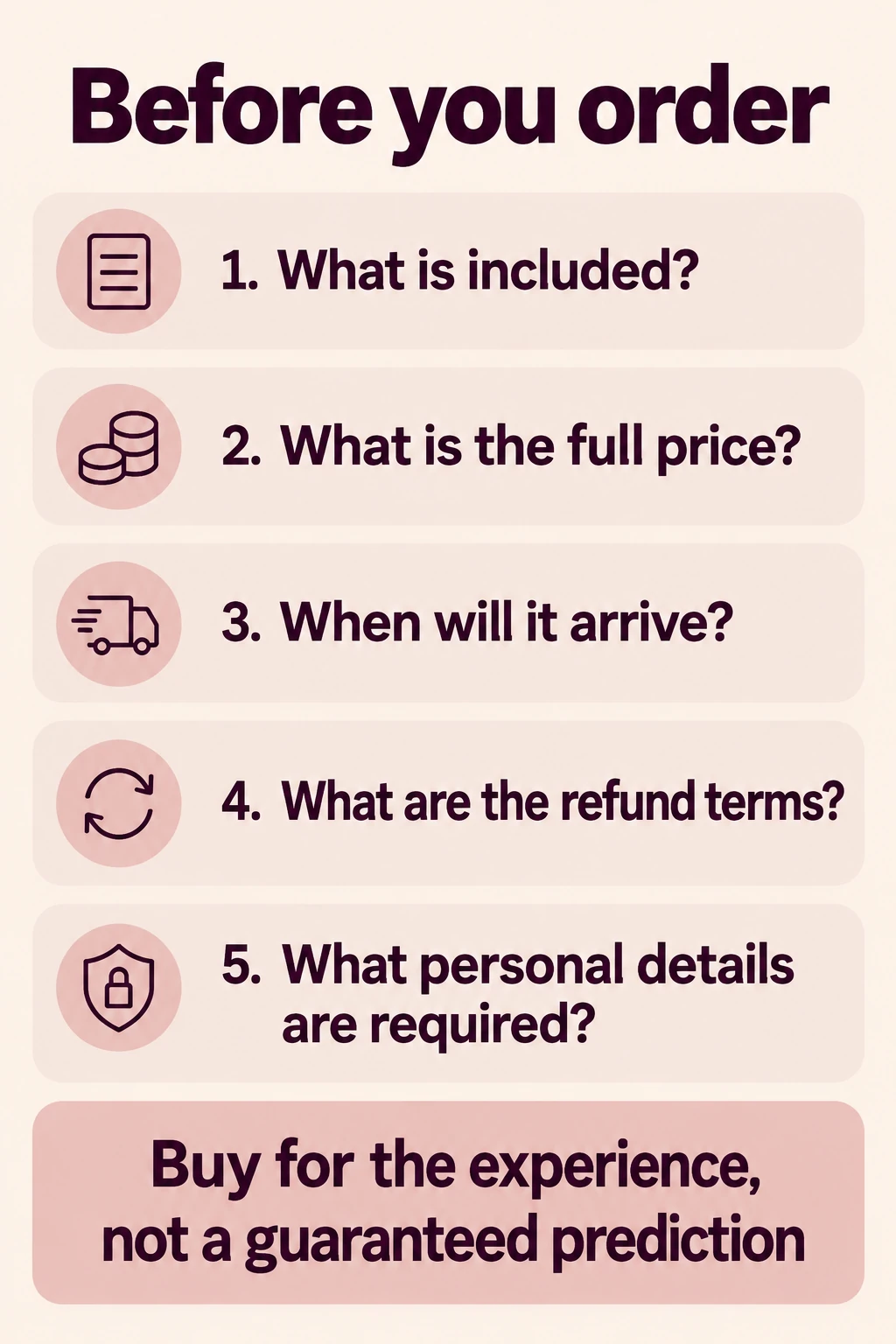
A short list to keep open before you order
- What exactly is included, in the seller's own words.
- The full total on the order summary, including extras and currency.
- Whether it's a one-off payment or something that renews.
- What the refund policy covers, who processes it and how to ask.
- How the drawing is made, if that matters to you.
- Whether delivery is digital, physical or both.
- What personal information you're asked for, and why.
- That you're on the seller's real page and not a copy.
Here's how one hypothetical shopper might work through it
Imagine a woman called Maya. She isn't a real customer, and this isn't a checkout we tested. Every seller's flow differs. She's heard friends mention soulmate sketches and thinks it would be a fun thing to try on a quiet Sunday evening.
She decides her budget before she looks at any page
Maya thinks about what she'd happily spend on a treat, such as a cinema trip with snacks. She chooses an amount that leaves her comfortable with the rest of her plans. Knowing her budget means she can enjoy browsing without deciding about money at every optional extra.
She reads the inclusions and the order summary slowly
She notes the main sketch and what the seller says comes with it. She doesn't mind waiting, so she leaves express delivery unticked. An extra reading might sound nice, but it would take her past her number, so she skips it.
Before paying, she checks the total matches what she expected and that nothing says recurring or membership. She takes a screenshot of the order summary.
She saves the terms and thinks about her details
Maya saves a copy of the refund policy. She checks what it covers, whether requests go to the seller, a payment retailer or both, and which contact route to use. If a required quiz field asks for something she isn't comfortable sharing, she decides not to buy rather than enter false details.
She decides in advance how she'll treat the result
Maya hopes to enjoy opening the portrait and reading about the qualities it describes. She might keep it in a private folder or talk about it with a friend. If it reminds her of someone, she can enjoy that coincidence while leaving any relationship with him to develop through mutual interest and consent.
Maya's example shows how a little preparation can leave room for the enjoyable part. She knows what she has chosen, what she will spend and where to find help with her order.
If your sketch hasn't arrived, start with the simple checks
Delays and lost emails do happen. Start with the ordinary explanations.
- Search your inbox, spam, promotions and other folders for the seller's name and your order number.
- Check that the email address on your receipt was typed correctly.
- Compare the time that's passed with the delivery time stated on the page and in your confirmation.
- Look for an order lookup or support page on the seller's or retailer's site.
If there's still nothing, contact the seller's support with your order number, payment date and the email address you used. Keep it brief and factual. If you don't hear back within a reasonable time, contact the payment retailer that processed the order, since they often have their own support process.
If that doesn't resolve it, your bank or card provider may be able to explain your options. Any refund will depend on the terms you agreed to and the rules where you live, so keep your screenshots and emails together.
Who might enjoy this, and when it's kinder to skip it
Some people love the ritual. Answering the questions, waiting for the email, opening a face and wondering about it with a friend over coffee. If you'd enjoy that the way you might enjoy a tarot spread or a horoscope, and can spend the money comfortably, it can be a pleasant few minutes.
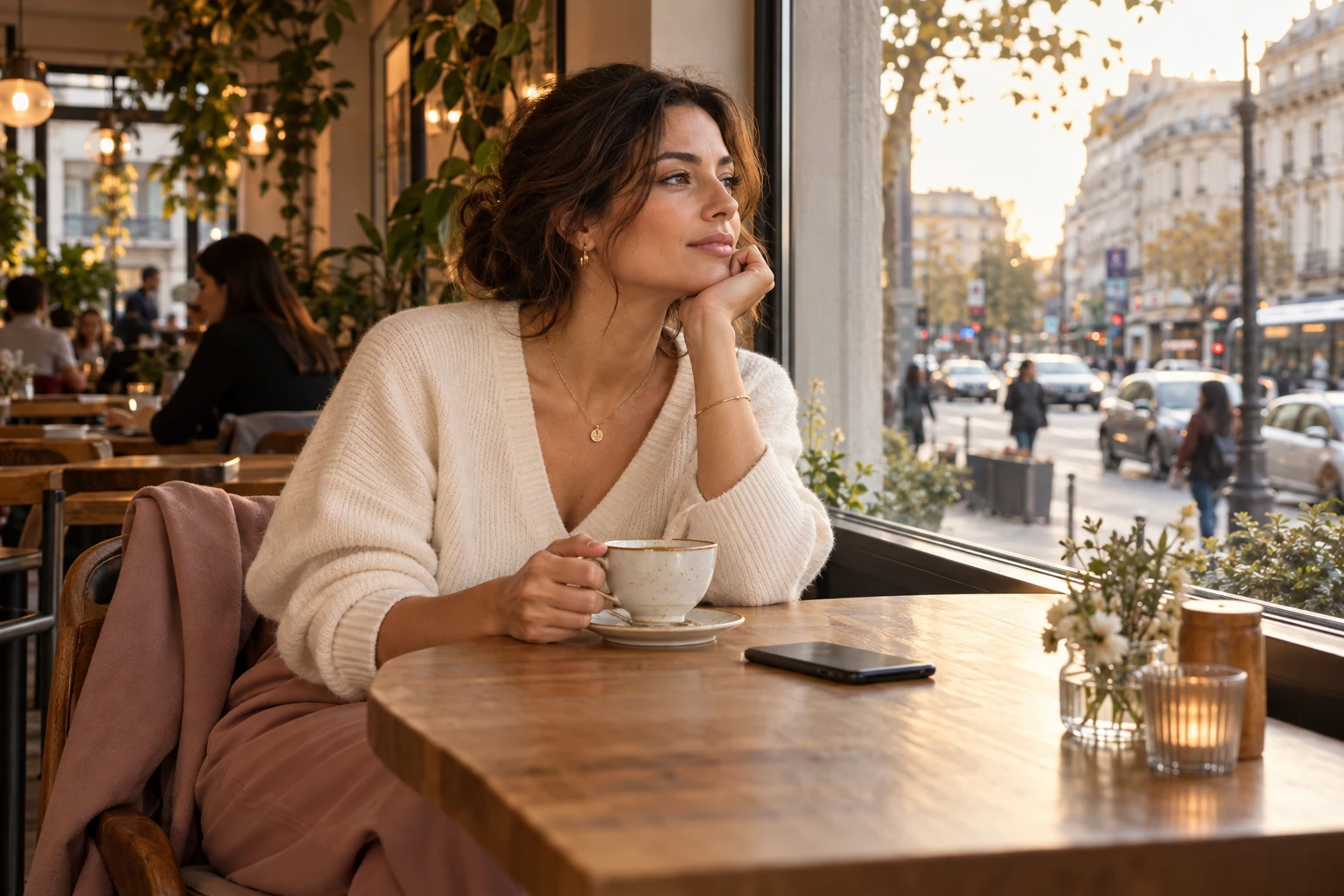
It can also prompt you to think about what you're looking for. Not the face itself, but whether the qualities the reading mentions are really the ones that matter to you.
Sometimes it's better to wait, though. If you're feeling raw after a breakup, a sketch might pull your attention towards one face when you'd rather be healing. If you'd be dipping into money set aside for something important, it isn't worth it. And if you're hoping the drawing will tell you whether to stay with someone, leave someone or wait for someone, that decision deserves real conversations and your own judgement, not a picture.
Skipping it doesn't mean closing yourself off to love. It just means this isn't what you need right now.
Leave room for the anticipation and the love you hope for
If the portrait and reading appeal to you, the terms are clear and the price feels comfortable, you may enjoy making an occasion of opening them. Notice what you are drawn to... perhaps a gentle expression or a description of someone who enjoys the same kind of life.
You can carry those wishes into meeting people, too. The man you come to love will have his own voice, habits and ways of making you smile. There is plenty still to discover together.